
Green County Weekly Arrest Record
The Greensburg Record-Herald and its e-editions give Green County its clearest recurring multi-day account. Its "For the record" column runs weekly. Entries sit in separate blocks. Greensburg Police gets one, and the Green County Sheriff gets the other. Each line names the agency and the arrest date. The officer or deputy, the warrant or charge, and the detention destination may follow. The paper publishes no mugshot gallery. This is a Wednesday paper, not a 72-hour database. The paper does not state its reporting cutoff. A late-week arrest can wait for the next edition, and editorial choice can drop an event entirely. Treat the column as a dated lead, then confirm the agency record and the court case.
Read Green County Blotter Entries
A newspaper paragraph packs several record systems into a few lines. Read it well by separating who made the arrest, who handled the booking, and what the court later did.
- Note the issue date and the event’s stated arrest date. They are not the same date.
- Identify Greensburg Police, the Green County Sheriff, KSP, or another arresting agency.
- Record the named warrant or charge as an charge, without turning it into a conviction.
- Look for a detention destination, but confirm current custody directly because the person may have been released or transferred.
- Match the person and date to Kentucky Judicial Indexes, then obtain the case file from the Green County clerk for the disposition.
The February 15, 2023 e-edition example shows the column's police entries and its warrant language. It illustrates format only, not anyone's current status.
Green County Arrest Log Fields
Because the paper writes in prose, blotter fields shift from entry to entry. A jail record follows a fixed schema instead. The inventory here reflects Record-Herald issues and flags what still needs verification.
| Entry detail | What it establishes | Verification route |
|---|---|---|
| Agency and officer | Who reported or made the arrest | Police or sheriff report |
| Arrest date | When enforcement occurred | Report or citation |
| Warrant or charge | Charge reported at that stage | Court file and final disposition |
| Age or address in old entries | Possible identity context | Use privately; do not republish |
| Detention center | Initial reported lodging point | Jailer, facility, or VINE |
| Photo | No gallery appeared in reviewed issues | Request from the booking custodian |
A blotter entry does not prove current custody. Release can come before print day. A person may sit in Taylor County while the arrest report and court case stay tied to Green County.
Record-Herald Arrest Archive
Start with the newspaper site and the e-edition archive. Kentucky Public Notices and the IADS edition system may index older issues. When an issue resists online search, contact the paper's archive desk with the approximate date and the phrase "For the record." Library or university microfilm can preserve additional years. The Record-Herald homepage is the current entry point.

The newspaper documents publication history only. It proves neither custody nor a full jail log. Past the print window, the source record sits with the agency that made the arrest, so ask the sheriff or police department directly. Give them the name, the approximate event date, the agency, and the record type you want. Older cases rest with the Green County clerk. Give the clerk a party name and year. A case number helps if you have one. Ask whether the court file remains at the courthouse or has moved to the State Records Center or KDLA.
Note: A newspaper copy, booking record, arrest report, custody status, and court disposition are separate records kept by separate custodians.
KSP Green County Enforcement Releases
The Kentucky State Police Post 15 archive posts selected releases touching Green County. Coverage spans checkpoints, traffic-safety activity, and event-specific arrest releases. It is official for KSP work but episodic. It is not a county booking log and says nothing about arrests handled only by city police or sheriff deputies.
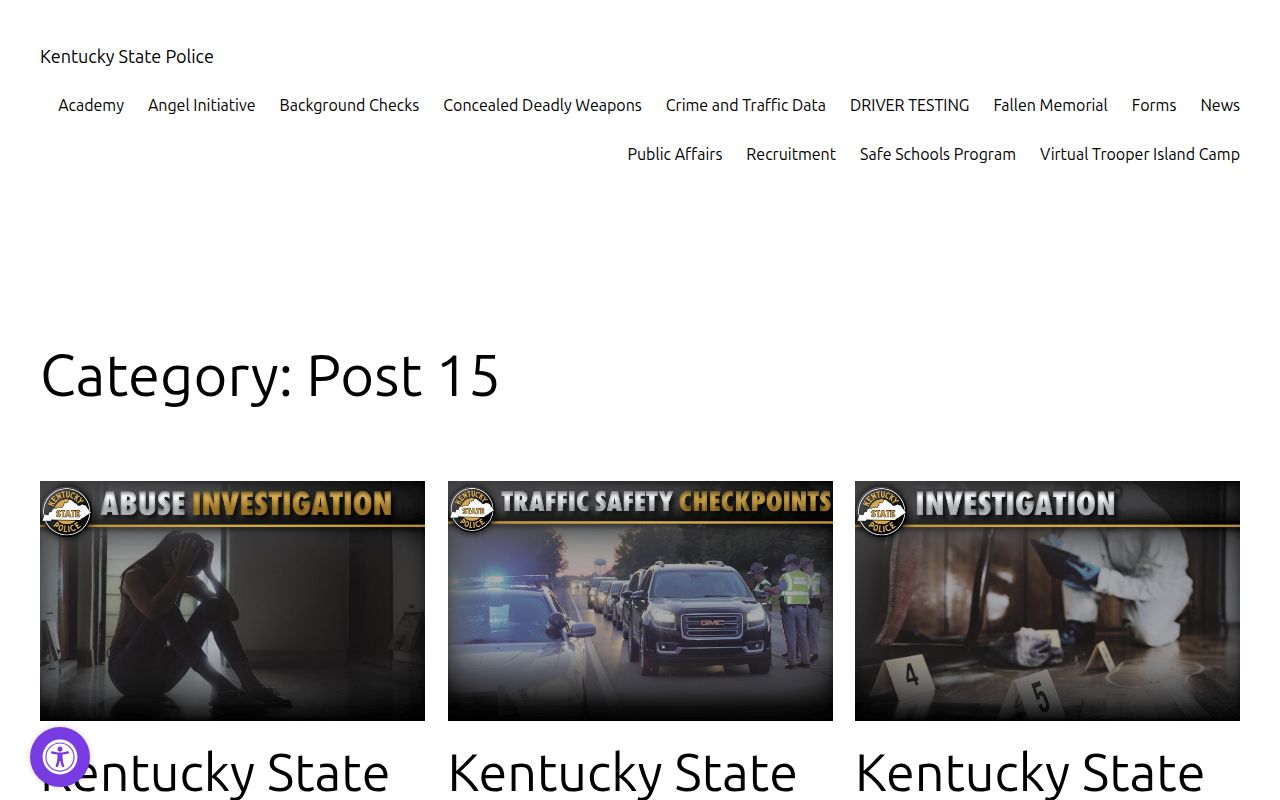
The archive adds an official enforcement channel. It keeps a press release distinct from a jail roster. One KSP release for Green County reported lodging at the Taylor County Detention Center. The arrest county and the custody county can differ. Confirm the named facility before assuming a county feed missed an entry.
Green County Arrest Source Map
No single publication follows a Green County arrest through its whole life. One arrest can touch several systems. It may start as a police report, become a booking in Green County or Taylor County, earn a Record-Herald mention, trigger a VINE event, and end in Green County court. Each source answers one question.
| Source | Best use | Limit |
|---|---|---|
| Record-Herald | Multi-day local news and old issues | Weekly, selected, not live custody |
| KSP Post 15 | Selected state-police actions | Not all county arrests |
| Sheriff or police | Agency report and booking request | No public online blotter verified |
| Jailer or receiving facility | Current custody | Moment-in-time answer |
| Green County court | Charges, hearings, disposition | Not a booking feed |
The official KSP Green County release illustrates that chain and its cross-county custody issue.

The text-based capture is a source example, not a person-focused display.
Secondary Green County Arrest Pages
Official records and local news come first. Private sites fill the gaps poorly. Their Green County coverage is thin, stale, or missing. Busted Newspaper offers a county directory, though its local page loads unreliably. Mugshots.com holds historical Green County entries from older years. RecentlyBooked omits Green County from its state directory. Arrests.org and Mugshots.zone list no Green County section at all. JailMugshots.org works as a directory, not a custody source. Treat the Busted Newspaper Green County landing page only as a caveated secondary lead. It cannot prove an arrest happened or not.
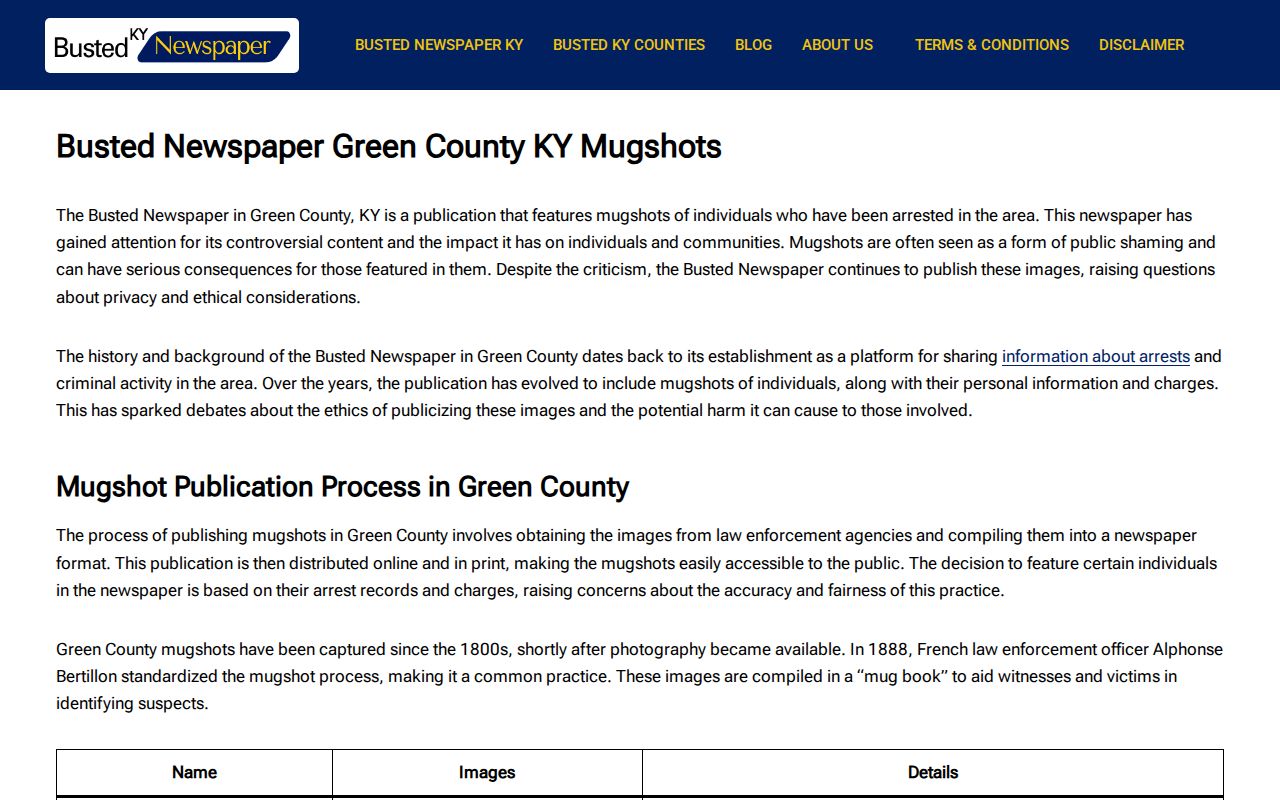
The capture documents the secondary landscape, not a verified current county roster.
Archive Green County Arrest Records
Kentucky's retention rules treat arrest paperwork as several distinct series. A daily arrest list is one thing. A broader arrests record is another. Mug photographs and fingerprint files follow their own schedule. The KDLA Records Management office spells out the timelines: daily arrest lists can be destroyed once no longer needed, while the broader record carries a 50-year benchmark for felony information and five years for misdemeanor information. Booking photos and fingerprints sit on an 80-year schedule. These are statewide records rules for Green County and every other county, not a guarantee that a given arrest file still exists at the courthouse. Ask the local custodian which series covered the case and whether the file was transferred or lawfully destroyed.
That archive path matters when local staff say an old arrest record moved elsewhere. For a same-day custody question, skip it. Arrests Last 24 Hours answers that directly, since a weekly article is no substitute for a live count.
Green County Charges and Outcomes
Blotter entries shift over time. A charge listed at booking can be amended, dismissed, or reduced as the case moves through court. Warrant entries change too, once a warrant is served or recalled.